
Wondering what TDEE is and how to use it for weight loss? This guide breaks down how to calculate your TDEE, create a sustainable calorie deficit, and avoid common pitfalls on your journey.

Understanding how your body uses energy is the first step toward effective and sustainable weight loss. You've likely heard about calories, but the key to unlocking your goals is a concept called TDEE. Learning how to use your TDEE for weight loss empowers you to create a personalized plan based on your unique metabolism and lifestyle. This guide will walk you through exactly what TDEE is, how to calculate it, and how to apply it to finally see the results you want. For a quick start, you can always use our TDEE Calculator to get your numbers instantly.
TDEE stands for Total Daily Energy Expenditure. It represents the total number of calories your body burns in a 24-hour period. Think of it as your body's total energy budget for the day. This budget includes everything from breathing and sleeping to working out and washing dishes.
Your TDEE is made up of four main components:
The key difference is that BMR is just one part of your TDEE. BMR is your energy expenditure at rest, while TDEE accounts for your BMR plus all the calories you burn through digestion and physical activity. Using your TDEE, not just your BMR, gives a much more accurate picture of your daily calorie needs.
While using a TDEE deficit calculator is easiest, understanding the manual calculation can be insightful. It's a two-step process: first, find your BMR, and second, multiply it by an activity factor.
The Mifflin-St Jeor equation is widely considered one of the most accurate formulas for calculating BMR (). Here are the formulas:
As an Amazon Associate we earn from qualifying purchases.
Gear that pairs well with what you just read.
As an Amazon Associate we earn from qualifying purchases.
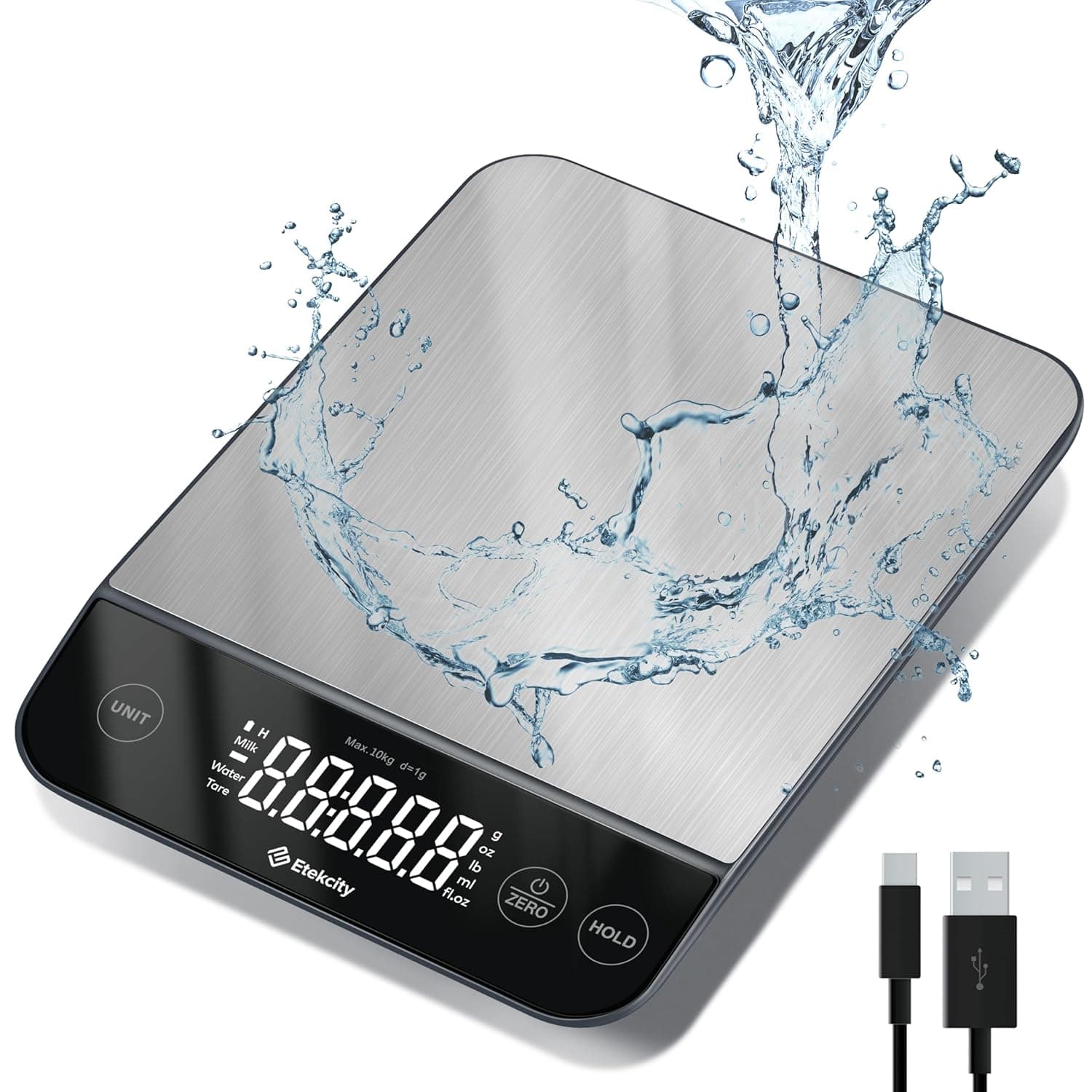
Accurate to 1g for perfect portions
Precise and built for daily macro tracking. Waterproof stainless steel, USB-rechargeable, and accurate to 1 gram for perfectly measured meals every time.

Travel-friendly 0.1g precision
Precision 0.1g accuracy in a compact, travel-friendly design. Perfect for tracking macros, portioning meals, or timing recipes—USB-C rechargeable and built for everyday use.
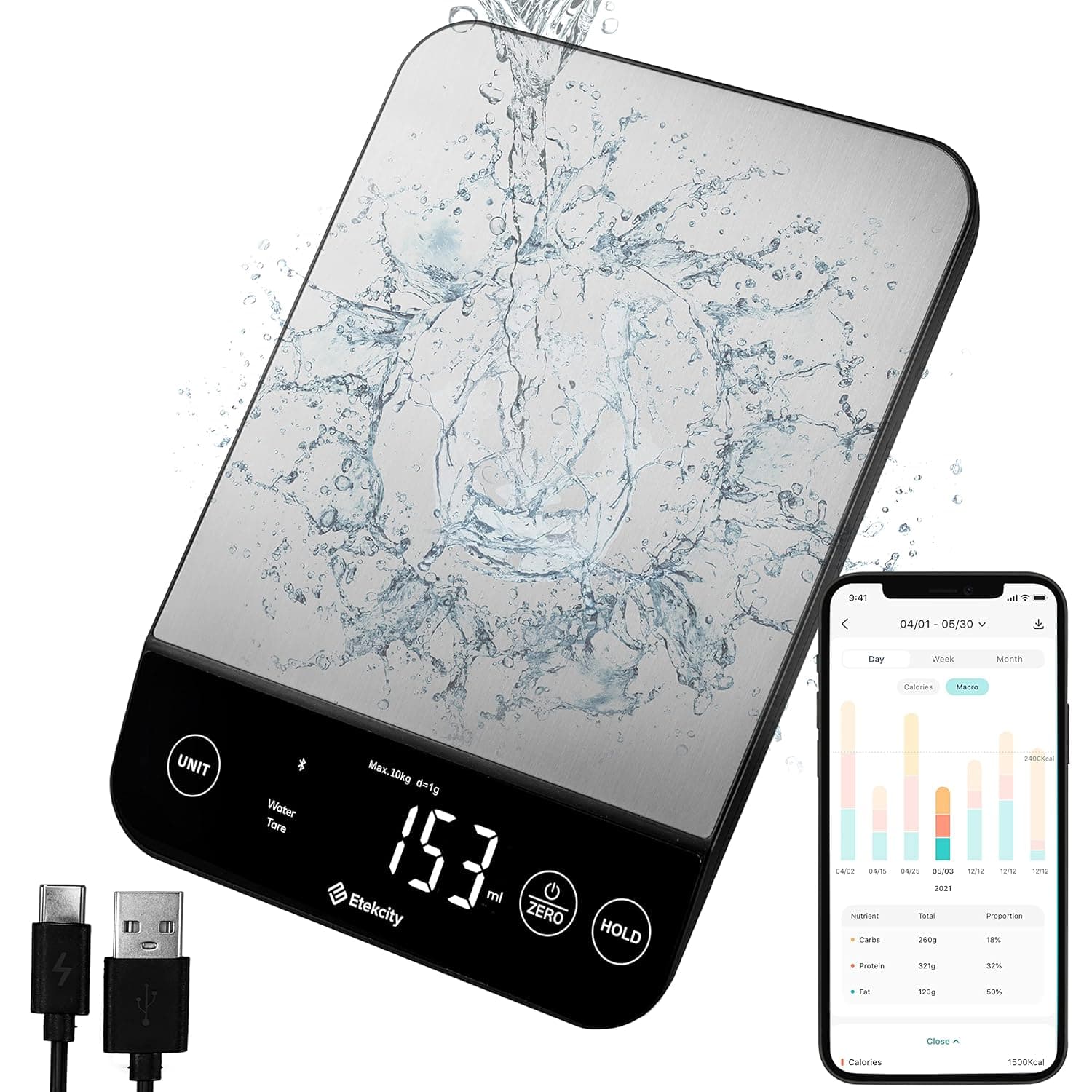
Smart tracking via Bluetooth app
Everything you love about our 'pick,' but smarter and app-connected: waterproof stainless steel, calorie and macro tracking via Bluetooth, USB-rechargeable, and accurate up to 22 lb.
Take your fitness journey further with our comprehensive collection of calculators, trackers, and educational content.
Next, multiply your BMR by an activity multiplier that best describes your typical week. Be honest here, as overestimating is a common mistake.
Let's meet Sarah. She is a 35-year-old woman, weighs 72 kg (158 lbs), is 165 cm (5'5") tall, and is lightly active (office job with 3 workouts per week).
1. Calculate Sarah's BMR:
(10 x 72) + (6.25 x 165) - (5 x 35) - 161
720 + 1031.25 - 175 - 161 = 1415 calories (BMR)
2. Calculate Sarah's TDEE:
1415 (BMR) x 1.375 (Lightly Active) = 1945 calories (TDEE)
Sarah's TDEE is approximately 1945 calories. This is the amount she needs to eat daily to maintain her current weight.
To lose weight, you need to consume fewer calories than your TDEE. This is called a calorie deficit. A sustainable and effective deficit is typically 10-20% below your TDEE. This usually equates to about 300-500 calories per day for most people, which can lead to a loss of about 0.5-1 pound per week.
For Sarah, a 15% deficit would look like this:
1945 (TDEE) x 0.15 = 292 calories.
1945 - 292 = 1653 calories per day for weight loss.
Once you have your target calorie intake, you can determine your macronutrient split. Our macro calculator can help you set specific targets for protein, carbs, and fats based on your calorie goal. You can also learn more about the recommended ranges for each in our guide to Acceptable Macronutrient Distribution Ranges (AMDR).
As you lose weight, your body becomes smaller and requires less energy to function. Your metabolism also becomes more efficient, a phenomenon known as metabolic adaptation (Trexler ET, et al., 2014). Both factors cause your TDEE to decrease.
This is why weight loss can plateau. If Sarah loses 15 lbs, her original calorie target of 1653 may no longer be a deficit. It's important to recalculate your TDEE every 10-15 pounds of weight loss, or every few months, to ensure your targets remain effective.
Calculating your TDEE is the most reliable starting point for any weight management goal. While the math is straightforward, a dedicated tool ensures accuracy and saves you time. Our TDEE Calculator for weight loss does all the work for you, giving you a precise estimate of your daily energy needs. Enter your details to get your personalized TDEE and take the first confident step on your health journey today.